European supermarket fridges got hacked. Again. Here’s what to know
Fatima holds a Bachelor's in Sociology and Communications from the University at Buffalo and has spent four years reporting on community issues for Rochester's grassroots publications. Her deep engagement with local neighborhoods informs her storytelling.
More from Fatima →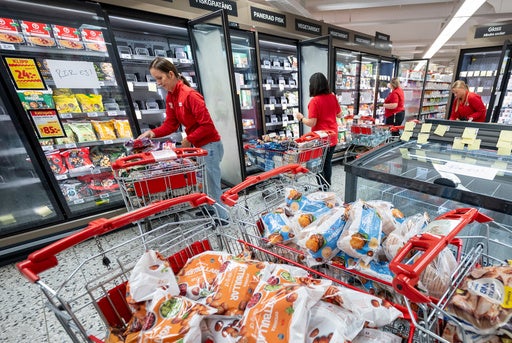
In this story
On a chilly November morning in Sjöbo, Sweden, the hum of refrigerators that usually promise fresh groceries turned into a silent alarm. As employees at ICA Kvantum arrived for their shifts, they were greeted with an unsettling sight: freezers filled with spoiled food, a result of a mysterious cyberattack that had left their refrigeration systems in disarray. "We lost everything in those fridges," lamented one employee, as shopping carts filled with wasted produce were wheeled out for disposal. This incident is not isolated; it’s part of a disturbing trend sweeping across Europe, where supermarket fridges are becoming targets for cybercriminals.
What Happened
Over the past week, supermarkets in at least six European countries—including Sweden, Belgium, Luxembourg, Ireland, Italy, and Estonia—reported alarming issues with their refrigeration systems. The attacks were not limited to large chains; even small businesses felt the impact. In Athens, a butcher shop owner, George Boubas, shared his experience of waking up to find his refrigeration unit hacked, raising the temperature to a staggering 150 degrees Celsius (302 degrees Fahrenheit). "My employees noticed something was wrong as they started their shift at 4 a.m.," Boubas recounted. It took a technician two hours to regain control, but thankfully, the meat products remained unaffected.
These incidents have raised questions about the security of connected devices in our homes and businesses. Katerina Mitrokotsa, a cybersecurity professor at the University of St. Gallen in Switzerland, emphasized that while these devices are designed to save money and reduce waste, they also present significant security risks. "A fridge doesn’t look like a security risk, and that’s exactly why attackers like it," she stated.
Previous Incidents
This recent wave of attacks is reminiscent of a similar incident just weeks prior, which primarily affected retailers in France and the Netherlands. French cybersecurity officials pointed to outdated remote control modules from Danish company Danfoss and U.S.-based Copeland as culprits. These systems, they noted, were older models that had not received necessary software or security updates. As supermarkets connect their fridges to monitor temperatures continuously and alert technicians before food spoils, they inadvertently create vulnerabilities that can be exploited by cybercriminals.
Community Reaction
The community response to these cyberattacks has been one of concern and urgency. Local businesses are reevaluating their cybersecurity measures, recognizing that their reliance on technology must be paired with robust security protocols. Boubas, the butcher shop owner, shared that he and other local businesses have resorted to disconnecting their refrigeration units from Wi-Fi to prevent further breaches. "It’s a drastic measure, but we have to protect our products and our livelihood," he explained.
Meanwhile, cybersecurity experts are urging businesses to prioritize the security of their connected devices. Nicole Carignan, a senior vice president at cybersecurity firm Darktrace, noted that many organizations have invested heavily in digital transformation yet neglect the foundational systems that ensure safety and efficiency. "Nobody broke into these refrigeration systems with a zero-day; they got in through internet-facing controllers and default passwords," Carignan pointed out. This highlights a growing need for businesses to invest in updating their technology and ensuring that their systems are secure.
Voices from the Community
The impact of these attacks extends beyond just financial losses; it affects the livelihoods of individuals who depend on these businesses. Local residents have expressed their worries about food safety and the reliability of their neighborhood stores. "We trust our local shops to provide fresh and safe food," one customer remarked. "It’s alarming to think that their fridges can be hacked so easily." This sentiment underscores the importance of community support for local businesses as they navigate these challenges.
What Experts Are Saying
Experts in the field of cybersecurity have emphasized that these incidents serve as a wake-up call for businesses and consumers alike. The interconnectedness of devices in our daily lives means that vulnerabilities in one area can have cascading effects. Richard Horne, head of the U.K.’s National Cyber Security Center, pointed out that the attacks exploited known vulnerabilities, underscoring the importance of maintaining good cyber hygiene. "Poor practices, like using weak passwords, continue to put organizations at risk," he stated.
Furthermore, there is a growing concern regarding the role of artificial intelligence in these cyberattacks. While some have speculated about the involvement of AI, experts have clarified that there is no evidence to support this claim. "This wasn’t an AI attack; it was a matter of exploiting vulnerabilities that have existed for a long time," Paul Chichester, director of operations at the U.K. cyber center, explained. This reinforces the notion that proactive measures and continuous monitoring are essential to safeguarding against such threats.
Looking Forward
As investigations continue, European authorities are working diligently to identify the perpetrators and prevent future attacks. France’s national cybersecurity agency, ANSSI, has been coordinating protective measures across various sectors since mid-October. The agency has issued security alerts and is mobilizing resources to assist potential victims. Meanwhile, the European Commission is also engaging in discussions to enhance collective resilience against cyber incidents.
The need for stronger cybersecurity measures is more pressing than ever. Businesses must not only invest in cutting-edge technology but also ensure that their existing systems are secure. This includes updating software, changing default passwords, and conducting regular security audits. As communities rally around their local businesses, there is hope that these incidents will lead to a renewed commitment to cybersecurity and a safer shopping experience for everyone.
Local Initiatives and Support
In response to these attacks, local governments and business associations are stepping up to provide support and resources for affected businesses. Workshops on cybersecurity best practices are being organized, aimed at educating small business owners about the importance of securing their systems. In cities like Sjöbo, local chambers of commerce are collaborating with cybersecurity firms to offer discounted services for small businesses looking to upgrade their security measures.
These initiatives not only help businesses recover from the immediate aftermath of the attacks but also foster a culture of cybersecurity awareness within the community. By empowering local entrepreneurs with the knowledge and tools they need to protect their operations, the community can build resilience against future threats.
Conclusion
In conclusion, the recent cyberattacks on European supermarket fridges serve as a stark reminder of the vulnerabilities that accompany our increasingly connected world. As businesses and consumers navigate these challenges, it is crucial to prioritize security and foster a culture of awareness and resilience. Together, we can work towards a future where our food systems remain safe and secure.